 Lakeshore Conservatory
Voice · Piano · Theory
Learn the craft.
Make it your own.
Good technique gives you choices.
Musical understanding helps you use them.
My aim is to help you become an independent, expressive musician: someone who understands what they’re doing, can work thoughtfully on their own, and has something to say through music.
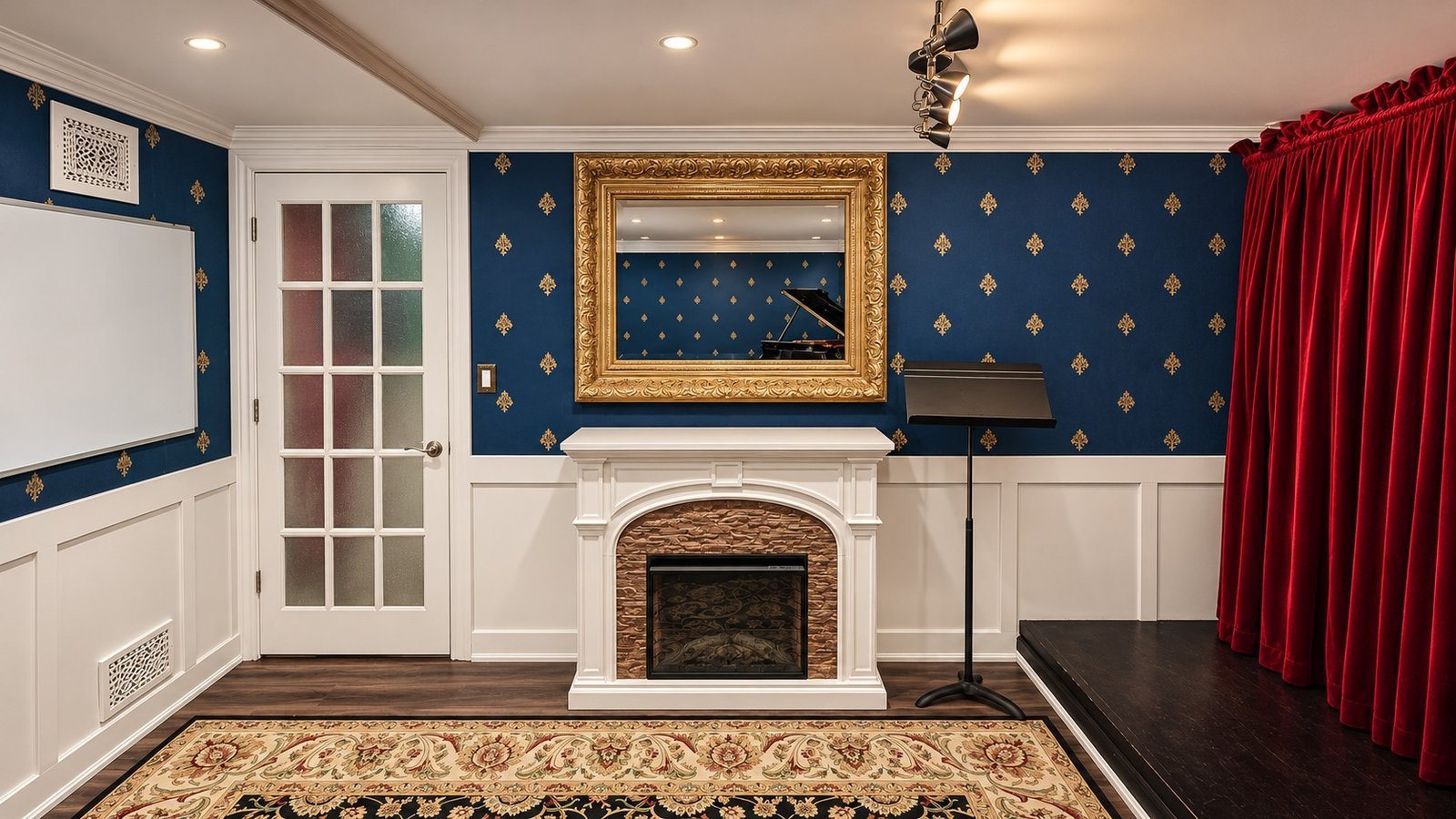
Voice lessons
Communication
is the cornerstone.
Breath, musicianship, and artistry give you the means to express yourself.
As a professional opera singer and classical voice teacher, I specialise in classical singing and sustainable vocal technique. We work on how your voice functions, what the music asks of you, and how to bring the words to life.
- Technique
- Breath coordination, resonance, registration, and vocal freedom.
- Repertoire & artistry
- Classical song, opera, and musical theatre; diction, interpretation, and performance.
- Musicianship
- Rhythm, sight-reading, theory, ear training, and musical independence.
I work with singers preparing for RCM examinations, festivals, competitions, university auditions, and performances—as well as those who simply love to sing.
Adult beginners are welcome, and younger singers generally begin around age eight. You don’t need previous training or music-reading experience.
Classical repertoire is at the heart of this studio. If contemporary pop or highly stylised commercial singing is your main focus, a teacher who specialises in that work will be a better fit.
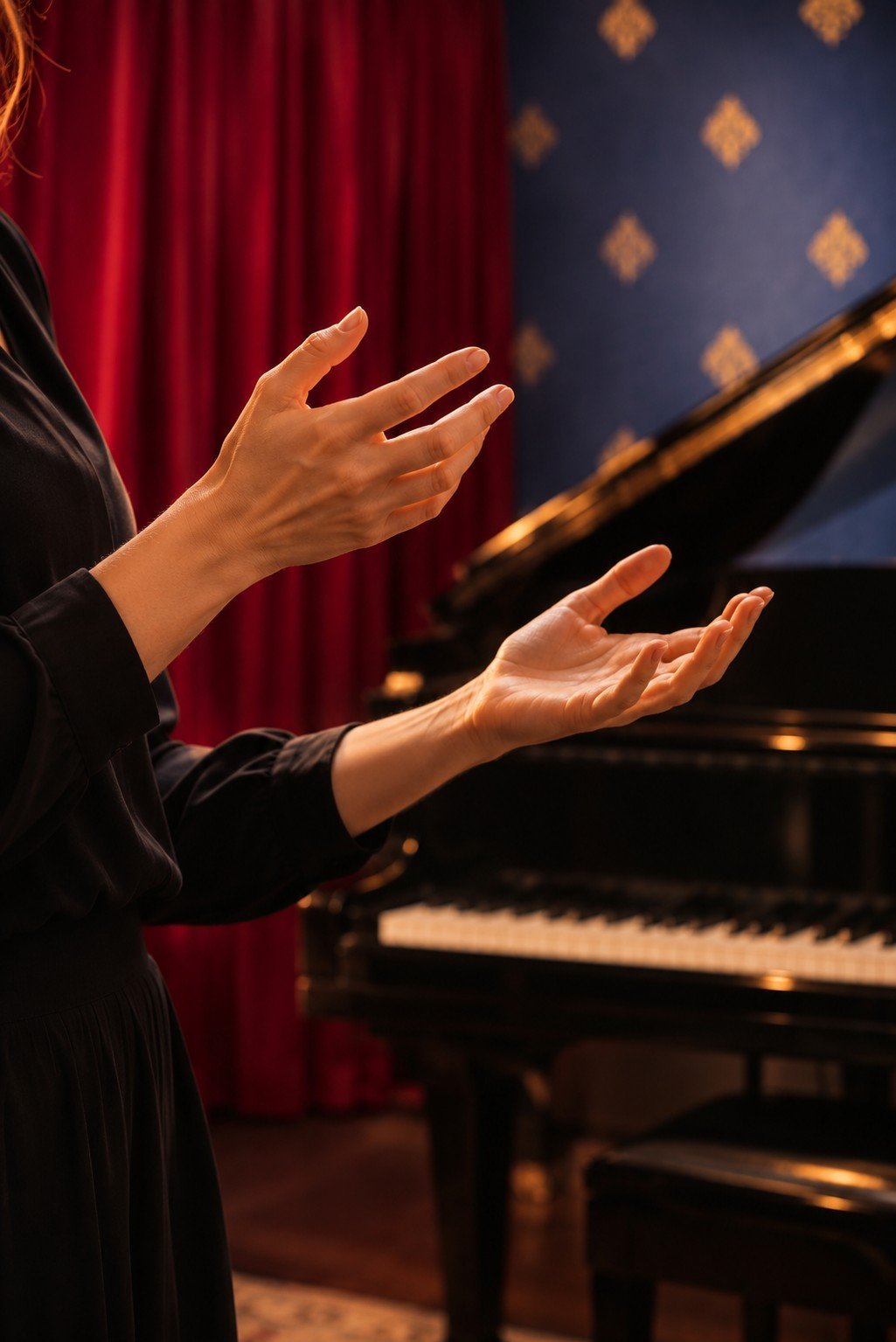
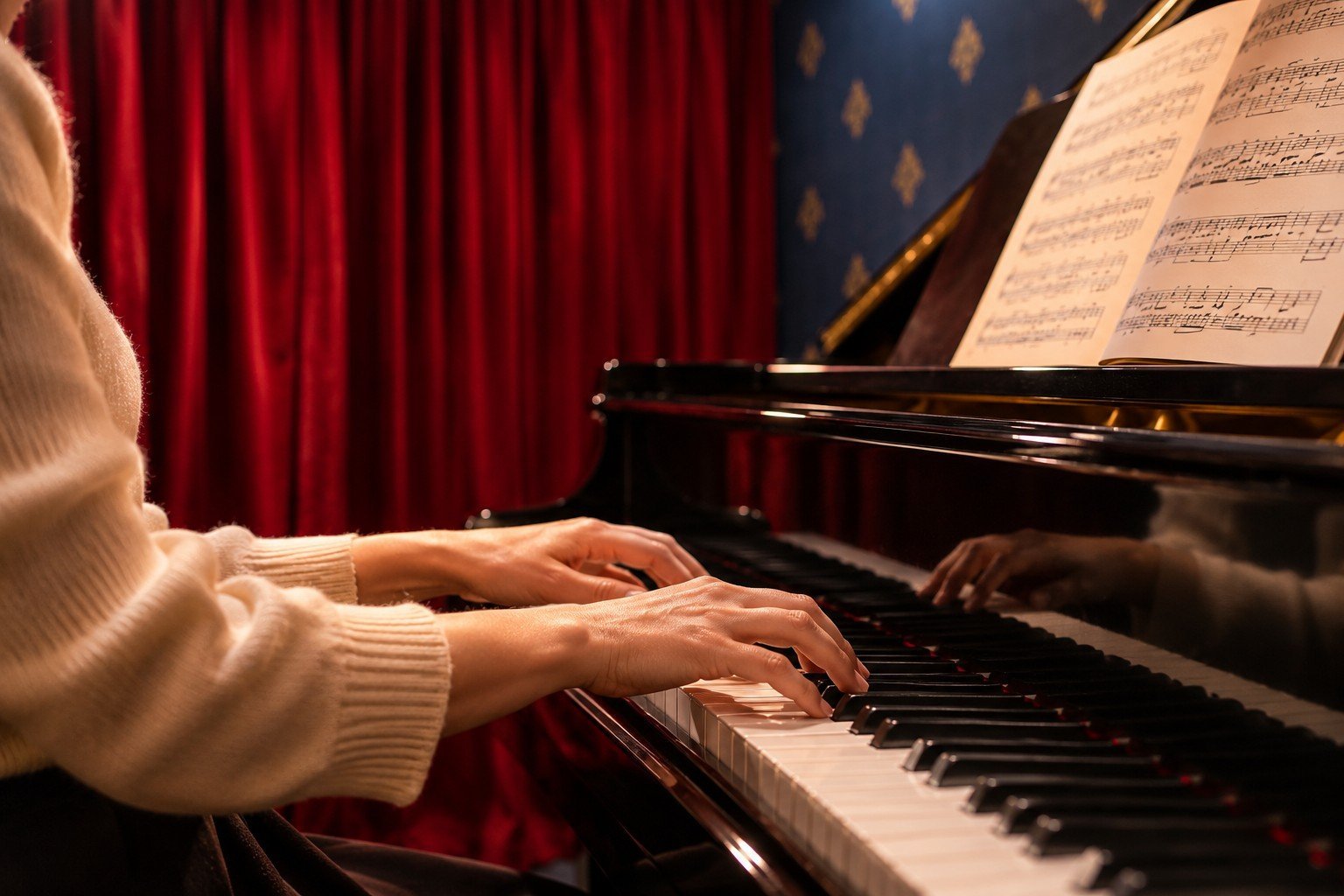
Piano lessons
Understand the music.
Bring it to life.
From the first notes, there is room for both careful work and expression.
Piano lessons develop the coordination, listening, and understanding that make playing feel purposeful. We connect what’s on the page with what you hear—and with the choices you make at the keyboard.
- Technique
- Coordination, ease, and a strong physical foundation.
- Musicianship
- Reading, rhythm, theory, ear training, and musical understanding.
- Repertoire
- Classical music alongside pieces chosen to suit your interests, experience, and goals.
Beginners are welcome, including adults coming to the piano for the first time or returning after years away. Lessons can support RCM examinations, festivals, competitions, and performances, or simply the pleasure of playing.
Piano lessons take place in the studio. You’ll need a piano or suitable keyboard at home for regular practice. We can discuss your instrument when you enquire.

Theory lessons
Know what’s
behind the notes.
Rudiments · Harmony · History
Understanding music gives you more freedom to make it.
Theory is part of our work in voice and piano lessons. I also offer dedicated theory instruction for RCM examinations, university entrance requirements, and advanced study.
We connect the ideas to music you can hear, read, and recognise. The aim is understanding you can use in your own music-making, well beyond an examination.
How we work together
Individual attention.
Purposeful practice.
You bring your interests and experience. I bring a trained ear, a practical plan, and room for the unexpected.
Lessons are shaped around the student in front of me. A child learning to read music, an adult returning to singing, and a performer preparing a role need different kinds of guidance. We’ll find work that challenges you and gives you a clear sense of what to do next.
Progress continues between lessons. We’ll discuss manageable practice goals and how to work towards them, with attention to consistency and understanding.
There is also a shared musical life here. Studio concerts and salons offer opportunities to perform, listen, and get to know the other people making music at Lakeshore.
Meet Stephanie →Getting started
Do I need previous experience?
No previous training or music-reading experience is needed. Some students are starting from the beginning; others are returning after time away or developing an established practice. We begin with where you are.
Do you teach children and adults?
Yes. Piano students include children, teens, and adults. Voice lessons generally begin around age eight; if your child is close to that age, we can discuss their readiness. Adult beginners and returning musicians are very welcome.
What kind of music will we study?
Classical singing and sustainable vocal technique are at the centre of my voice teaching, with work on song, opera, and musical theatre. Piano repertoire combines a sound technical foundation with music suited to your interests and stage of learning. You can read more in the voice and piano sections above.
How do I begin?
Start with a message about yourself or your child and what you would like to work on. A trial lesson is 30 minutes and $60, with no obligation to continue. We can use that time to discuss your goals, lesson length, and whether Weekly or Cadenza Lessons suit you. Read about the trial lesson →
Practice at home
How much should I practise?
Aim for focused work on most days, rather than saving everything for the day before your lesson. The right amount depends on your experience and what we are working towards. We will set a realistic routine together and adjust it as your skills develop. A short session with a clear purpose is more useful than a long session of simply playing or singing through everything.
What does useful practice look like?
Choose one or two things from your lesson notes. Work slowly enough to notice what is happening, give the difficult passage some attention, then put it back into the music. Listening, rhythm, score study, and learning words all count as musical work. For singers, practice does not need to mean singing for the entire session.
How can I help my child practise?
Help make practice a regular part of the week, with an instrument ready to use and a quiet place to work. You are welcome to attend lessons so you know what we are working on. Encouragement and a dependable routine help; the aim is to gradually give your child ownership of their learning.
What instrument or equipment do I need?
Piano students need a tuned acoustic piano or a digital piano with 88 weighted, touch-sensitive keys and a pedal. Voice students should ideally have access to a keyboard. All students should have a metronome or metronome app. If you are unsure about your instrument, we can discuss it before you begin.
Planning your lessons
How long should my lessons be?
Lessons are available in 30-, 45-, and 60-minute formats. We will choose a length that gives your work enough time, taking your age, experience, and goals into account. Compare lesson lengths and fees →
How often should I come?
Weekly Lessons reserve a regular time. Cadenza Lessons offer flexible booking, with students usually attending twice a month on average. The Cadenza requirement of at least one lesson every two months is the minimum for remaining on the active roster, not a recommended pace for progress. Read the Cadenza policy →
Do I have to take examinations?
No. I support students preparing for RCM examinations, festivals, auditions, and performances, but examinations are a choice. We can also work towards goals that matter to you without an exam syllabus.
Where do lessons take place? Are online lessons possible?
The studio is at 2370 Lake Shore Boulevard West in Mimico, Toronto. Piano lessons take place in the studio. If you are interested in online voice or theory lessons, please ask when you enquire so we can discuss a suitable arrangement. Contact and location →
What if I need to miss a lesson?
Please give at least 48 hours’ notice. Illness is the exception to the notice requirement, with Zoom, a personalised practice video, or a make-up available under the studio policy. Make-up credits expire one month after the missed lesson and cannot be rebooked once used. The full arrangements differ by stream, so please read the policy for your lessons. Read the studio policy →